Is Forex Trading Halal? Islamic & Swap-Free Accounts
Is forex trading halal? We break down the issue of riba (overnight swaps), the differing scholarly views, and how swap-free Islamic accounts work — so Muslim traders can decide with clarity.

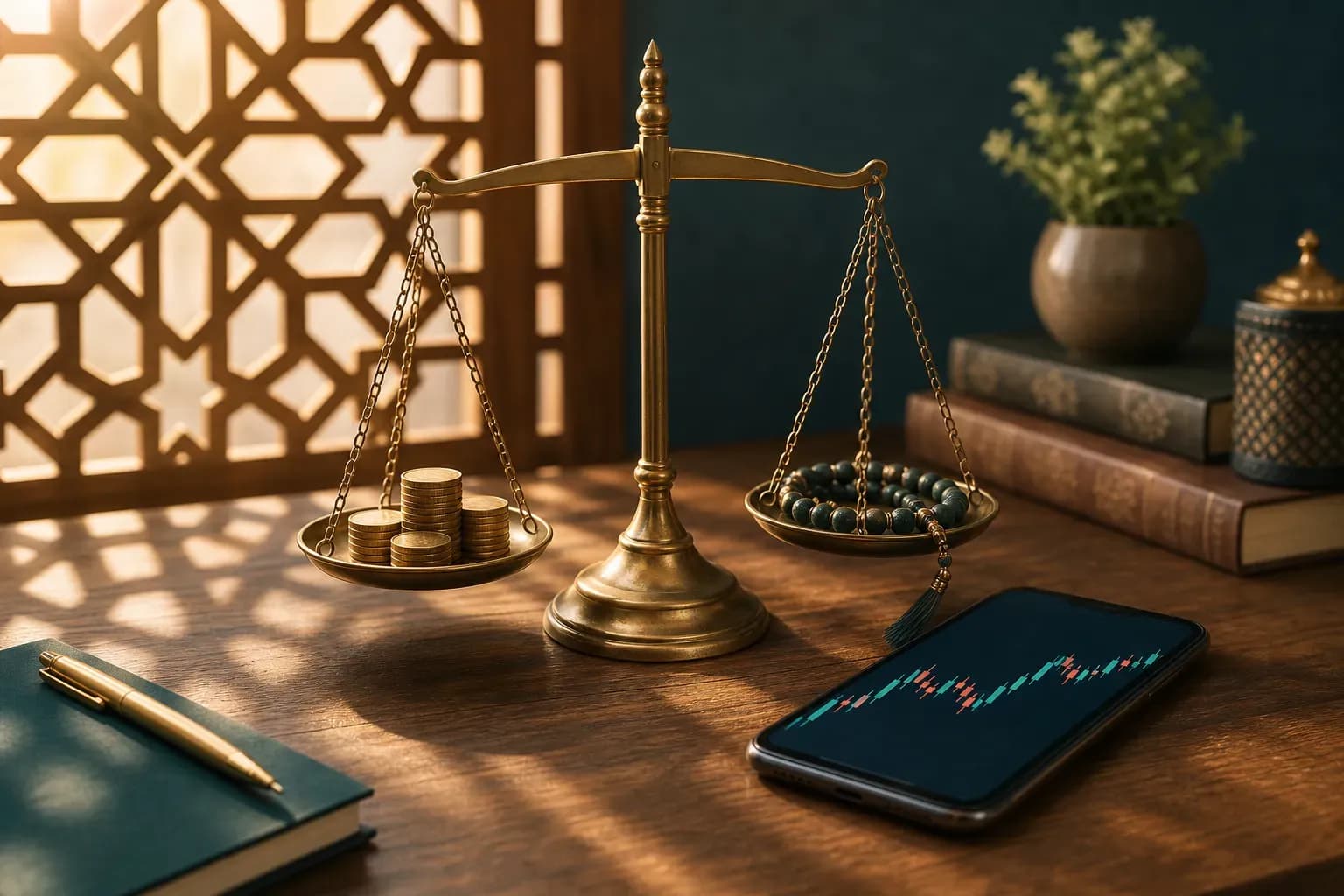
Why the Halal Question Matters for Muslim Traders
For a Muslim trader considering forex trading in Kano or Kaduna, the question isn't just whether forex can make money. It's whether the money is permissible to earn in the first place. That distinction shapes everything, and it's why "is forex trading halal" is one of the most searched trading questions across Northern Nigeria and the wider Muslim world.
This article won't hand you a fatwa. It can't. What it will do is lay out the actual concerns honestly, explain the mechanics of swaps and swap-free accounts, and show you the range of scholarly views so you can have an informed conversation with someone qualified to guide you.
The Growing Interest in Forex Across Muslim Communities
Muslim-majority regions have become some of the fastest-growing markets for online trading. Indonesia, Malaysia, the Gulf states, and Northern Nigeria all show rising retail participation year on year. Smartphone access is the driver: millions of people who never had a brokerage account now carry a trading platform in their pocket.
That growth creates a real tension. Interest in the markets is climbing faster than clear, faith-conscious guidance is being produced. A young trader in Sokoto can open an account in minutes, but finding a straight answer on whether the mechanics comply with Shariah takes far longer.
Faith and Finance: Why Compliance Comes First
For observant Muslims, financial decisions sit inside a framework, not outside it. The goal isn't only profit; it's profit earned in a way that doesn't violate religious principle. A trade that returns 20% but involves prohibited elements is, from this perspective, a loss regardless of the balance on screen.
This is why the halal forex trading conversation matters more than the strategy conversation for many. Get the permissibility question wrong and the technical skill barely counts.
The Main Concern: Riba (Overnight Swap Interest)
The single biggest issue with standard forex trading, from an Islamic standpoint, is riba. When you hold a position past a certain time (typically 5 PM New York time, which is 10 or 11 PM Lagos time depending on daylight saving), your broker either charges or pays you a small amount of interest. That's the swap. And swap is interest.
What Is Riba and Why It Is Prohibited in Islam
Riba refers to interest or usury, and its prohibition in Islam is explicit and severe. The Qur'an addresses it directly in Surah Al-Baqarah, and the prohibition is one of the clearest financial rulings in Islamic jurisprudence. It covers both paying and receiving interest, which matters here: even a swap credited to your account is problematic, not just one charged against it.
The logic behind the prohibition centres on money generating money without underlying productive activity or shared risk. When you earn simply for holding funds over time, that's the mechanism riba forex critics point to.
How Swaps Work in Standard Forex Accounts
Every currency you trade carries an interest rate set by its central bank. When you hold a forex position overnight, you're effectively borrowing one currency to hold another, and the swap reflects the interest rate difference between the two.

Hold a long EUR/USD position overnight and your account is adjusted by a swap figure. Small on any single night, sometimes a fraction of a dollar. But it's calculated on the full position size, not your margin, so on a large position held for weeks it adds up. On a Wednesday, most brokers apply triple swap to account for the weekend settlement.
From a Shariah perspective, the size doesn't change the ruling. A small amount of riba is still riba.
Other Concerns: Gharar (Uncertainty) and Speculation
Swaps aren't the only concern raised by scholars. Gharar refers to excessive uncertainty or ambiguity in a contract, and some argue that highly leveraged, short-term speculation edges into territory that resembles gambling (maysir), which is also prohibited.
Here's the honest complication: not all scholars weigh gharar the same way. Some see reasonable commercial risk-taking as permissible and normal. Others view heavy speculation with borrowed money as crossing a line. This disagreement is exactly why the next section exists.
The Differing Scholarly Opinions on Halal Forex Trading
There is no single, unanimous Islamic ruling on forex trading. Anyone who tells you otherwise is oversimplifying. Scholars and Islamic finance bodies have reached genuinely different conclusions, and understanding the spread of views is more useful than pretending one side has settled the matter.

The View That Forex Can Be Permissible
One group of scholars holds that currency exchange is permissible in principle. Trading one currency for another is a recognised transaction in Islamic commerce (sarf), provided certain conditions are met: the exchange happens on the spot, and both sides of the transaction are settled without delay.
Supporters of this view argue that modern spot forex, when stripped of interest through a swap-free account, can satisfy these requirements. The exchange is immediate, the pricing is transparent, and if no riba is involved, the core objection falls away.
The View That Forex Is Impermissible
Other scholars conclude that forex trading, as retail traders actually practise it, is not permissible. Their reasoning usually rests on several points at once: the presence of leverage (which resembles an interest-bearing loan), the speculative nature of short-term trading, and the argument that true "spot" settlement doesn't genuinely occur in a leveraged margin account.
For this group, removing the swap isn't enough. If the underlying structure relies on borrowed money and rapid speculation, they hold that the "is forex haram" answer leans toward haram regardless of account type.
The Middle Ground: Conditional Permissibility
A significant number of scholars land somewhere between the two positions. Their view: forex can be permissible if specific conditions are met. No riba (so a swap-free account is mandatory). No excessive leverage. Trading based on analysis rather than pure gambling. And a genuine intention to engage in legitimate exchange rather than reckless speculation.
This conditional approach is probably the most widely referenced among Islamic finance practitioners today. It doesn't give a blanket yes or a blanket no. It says the permissibility depends on how you trade and under what terms.
Why You Should Consult a Qualified Scholar
I'm a trader, not a mufti, and this article is not religious guidance. The views above are summarised to inform you, not to rule for you. Different madhabs (schools of jurisprudence) and different scholars apply different reasoning, and your personal situation may raise questions this article doesn't cover.
Speak to a scholar you trust, ideally one who understands both Islamic jurisprudence and how modern financial markets actually function. That combination is rarer than it should be, but it's worth seeking out.
What Is a Swap-Free (Islamic) Forex Account?
A swap-free account, also called an Islamic forex account, is a trading account that removes overnight interest entirely. No swap is charged and no swap is paid, which addresses the central riba concern directly.
How Swap-Free Accounts Remove Overnight Interest
On a standard account, holding a position past the daily rollover triggers a swap adjustment. On a swap-free account, that adjustment simply doesn't happen. You can hold a EUR/USD or gold position for one night or several weeks, and no interest accrues in either direction.

The mechanics are handled at the broker level. You trade the same instruments, the same pairs, on the same platforms (MT4, MT5, or a proprietary platform), but the rollover interest calculation is switched off for your account.
Administration Fees and What to Watch For
Swap-free doesn't always mean cost-free, and this is where you need to read carefully. Some brokers replace the swap with a fixed administration fee on positions held beyond a certain number of days. This fee covers the cost of financing the position and is structured as a flat charge rather than interest.

Whether that structure is Shariah-compliant is itself a point some scholars examine, because a fee tied to how long you hold can look, to critics, like interest wearing a different hat. Ask directly: is there an admin fee, when does it kick in, and how is it calculated? A broker that answers clearly is one you can assess properly. One that dodges the question tells you something too.
Who Islamic Accounts Are Designed For
Islamic accounts exist specifically for Muslim traders who want to avoid riba. Most regulated brokers offering them will ask you to confirm your reason, and some may request that you don't abuse the swap-free status for pure interest arbitrage on high-swap pairs.
They're built for genuine faith-conscious traders, not as a loophole for everyone chasing a cost saving.
How to Trade in a More Shariah-Conscious Way
Removing the swap is step one, not the whole picture. A more Shariah-conscious approach considers the account type, the broker, your leverage, and honestly, your own behaviour at the screen.
Choosing a Swap-Free Account and a Regulated Broker
Start with one of the swap-free account types from a broker you can actually verify. Regulation matters here for a reason beyond religion: an unregulated broker can manipulate spreads, delay withdrawals, or vanish, and no account label protects you from that. Rally Trade operates under oversight through the Financial Commission, which gives you a channel for recourse that unregulated offshore operators don't offer.
Check that the swap-free terms are stated in writing before you fund the account. Not implied. Written.
Avoiding Excessive Speculation and Managing Risk
The scholars worried about gharar and gambling aren't worried about nothing. A trader who opens ten positions on a whim, using maximum leverage, chasing a quick double, is behaving in a way that troubles even the permissive camp.

Trade with a plan. Use modest position sizes, set a stop loss on every trade, and treat this as analysis-driven activity rather than a bet. This is sound risk management regardless of faith, and it happens to align with the conditions many scholars attach to permissibility. Leverage magnifies losses just as it magnifies gains, and a position that moves against you can erase your margin faster than you expect.
Keeping Your Intentions and Knowledge Aligned
Niyyah (intention) carries weight in Islamic practice, and it applies here. Are you trading to build skill and engage the market legitimately, or gambling and calling it trading? Only you know the honest answer.
Pair that intention with education. Understand what you're trading, why prices move, and what your risk is on every position before you enter it.
Does Rally Trade Offer Islamic Accounts?
Yes. Rally Trade offers swap-free account options designed for Muslim traders who need to avoid overnight interest, available across the platforms we support.
Swap-Free Options on Rally Trade
Swap-free status can be applied so that positions held overnight incur no swap interest, addressing the primary riba concern. You trade the same range of instruments, forex, commodities, indices, and more, on MT5, with Naira-denominated deposits starting from $100.

Before you open one, ask our team directly about any administration fees on long-held positions and the exact swap-free terms. Get the specifics so you can evaluate them against your own understanding of what compliance requires.
Getting Started as a Muslim Trader
Open a free demo account first and practise without risking capital. Learn the platform, test a strategy, and get comfortable with position sizing before any real money is involved. When you move to a live account, request the swap-free option and confirm the terms in writing.
Rally Trade also runs in-person seminars across Nigerian cities, which are a useful place to ask questions face to face.
Conclusion: Making an Informed, Faith-Conscious Decision
The question of is forex trading halal doesn't have a tidy universal answer, and you should be sceptical of anyone who claims it does. What you can do is understand the concerns clearly: riba through swaps, gharar through excessive uncertainty, and speculation that drifts toward gambling. A swap-free account addresses the first of those directly, which is why it exists.
The rest is on you and the scholar you consult. Choose a regulated broker, use a swap-free account with terms you've read in writing, trade with discipline rather than impulse, and keep your intention honest. That's the most a trading platform can offer toward a faith-conscious decision; the ruling itself belongs to qualified religious authority.
Trading carries significant risk and is not suitable for everyone. Past performance tells you nothing reliable about future results. Never commit money you cannot afford to lose, and make sure you fully understand how leveraged products work before you put capital at stake.
Frequently Asked Questions
Is forex trading halal or haram?
×
There is no single answer that all scholars agree on. Some scholars permit forex trading when it avoids riba (interest) through swap-free accounts and follows Shariah principles, while others consider elements like leverage or currency speculation problematic. Because this is a matter of religious ruling, you should consult a qualified Islamic scholar for guidance specific to your situation.