Trump Lands in China as CPI Shock Hits Markets
Global markets are entering another high-volatility phase, and this time, the drivers are coming from two major fronts simultaneously- Donald Trump’s arrival in China for high-level negotiations, and, Hotter-than-expected US inflation data shaking rate expectations.
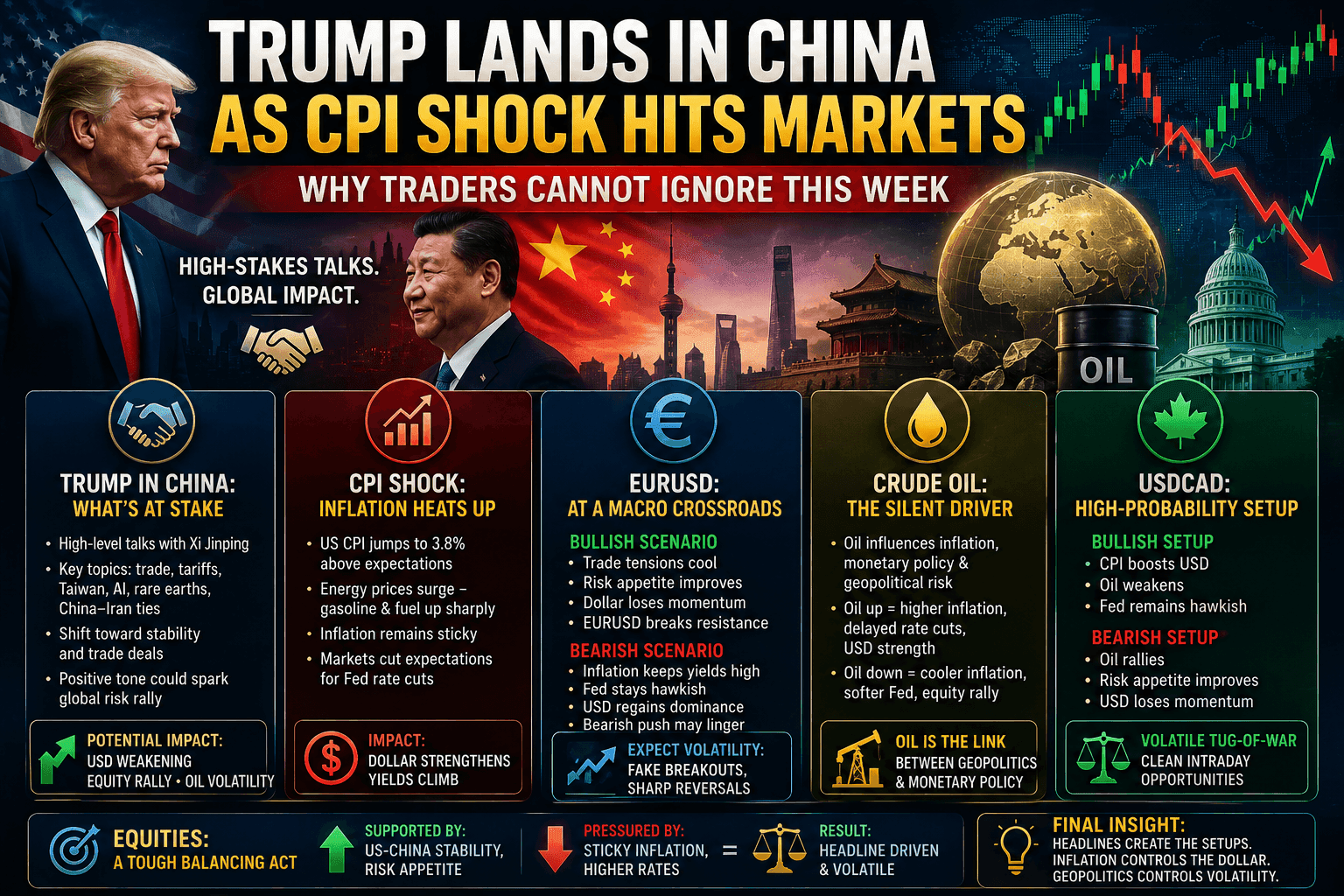
Global markets are entering another high-volatility phase, and this time, the drivers are coming from two major fronts simultaneously- Donald Trump’s arrival in China for high-level negotiations and Hotter-than-expected US inflation data shaking rate expectations. For traders, this combination is explosive. Because while geopolitics is influencing sentiment and global trade expectations, inflation is now directly influencing the US dollar, bond yields, oil, equities, and major forex pairs. This is no longer a “technical-only” market. This is a macro battlefield.
Trump Arrives in China — Why the Market Cares
US President Donald Trump has officially arrived in China for talks with President Xi Jinping amid growing global economic pressure and fragile geopolitical conditions. The market is paying close attention because discussions are expected to cover trade relations, tariffs, Taiwan, artificial intelligence, rare earth exports, and China’s relationship with Iran. Reports suggest Trump is now leaning more toward stability and trade deals rather than direct confrontation. That shift matters. Why? Because China remains deeply connected to global manufacturing, commodity demand, and overall market risk sentiment. This visit is bigger than politics. If the meeting produces softer trade rhetoric, tariff relief, or improved diplomatic tone, then global markets could react aggressively.
Potential market reactions should see USD weakening because improved global sentiment often reduces safe-haven demand for the dollar. Equity rally is possible because tech and industrial stocks usually benefits from better US-China relations. Oil volatility is also expected because China is one of the world’s largest oil consumers. So, this meeting is expected to produce positive trade outlook, boosts growth expectations and also supports commodity demand.
Meanwhile… US CPI Just Changed the Entire Market Narrative
Yesterday’s CPI release reminded traders that inflation is still a major problem. US inflation accelerated to 3.8%, above expectations, reinforcing fears that the Federal Reserve may keep rates higher for longer. Energy prices were a major contributor to the rise. gasoline prices surged, fuel costs increased sharply, and oil-related inflation remained sticky. The CPI data triggered an immediate reaction across currency markets. The US Dollar Index (DXY), for example, rallied sharply. Treasury yields climbed. And traders reduced expectations for aggressive Fed easing. This is critical because the market had recently begun pricing in softer inflation, lower rates, and weaker USD. Now? That narrative is being challenged.
EURUSD — Caught Between Two Massive Forces
EURUSD is now trading in one of the most complicated macro environments in months. On one side- Trump’s China diplomacy improves risk sentiment as weaker safe-haven demand pressures USD. On the other side- hot CPI strengthens the dollar as rising yields support USD demand. What this means for EURUSD traders is clear: the pair is now sitting at a macro crossroads.
Bullish EURUSD Scenario: If trade tensions cool, and risk appetite improves, and Dollar loses momentum, then, EURUSD could break any immediate resistance
Bearish EURUSD Scenario: If inflation keeps yields elevated, as it currently is obvious, and Fed stays hawkish, and current sentiments suggests, then, USD should regains dominance as current H4 chart shows at the moment, and so, current bearish push may linger
Traders should expect fake breakouts, sharp reversals, and news-driven volatility. This is not a clean trend environment. It is a reaction environment.
Crude Oil — The Silent Driver Behind Everything
Oil remains one of the most important assets in the current market structure. Why? Because oil is now influencing inflation, central bank policy, and geopolitical risk pricing simultaneously. ForexFactory headlines for example, continue to show markets reacting aggressively to Middle East developments and oil disruptions. If oil price continues to rise- inflation will remain elevated, rate cuts willget delayed, and USD strength may continue. If oil falls- inflation pressure will cool, Fed expectations will soften, and equities may rally. Oil is now acting as a transmission mechanism between geopolitics and monetary policy.
USDCAD — Quietly Becoming a High-Probability Macro Trade
Markets are trying to decide which force matters more: possible US-China stabilization & improving global sentiment, or sticky inflation & higher-for-longer interest rates. That conflict explains why indices are becoming increasingly headline-sensitive. The real story traders must understand is that the market is no longer driven by one single narrative. Right now, institutional traders are pricing inflation, geopolitics, diplomacy, energy, and central bank policy simultaneously. These creates unstable trends, rapid sentiment shifts, and increased volatility across all asset classes.
Current Market Drivers
- Trump-China negotiations
- Sticky US inflation
- Oil volatility
- Fed uncertainty
- Geopolitical repricing
Final Trader's Insight
This week is not about indicators alone. It is about understanding macro flow, reading sentiment shifts, and reacting faster than the crowd. Because right now headlines are creating the setups, inflation is controlling the dollar, and geopolitics is controlling volatility.